 I have worked in residential treatment for over thirteen years. I have worked in 3 treatment centers in Utah County, one of which is a lock down facility. The treatment center at which I currently work is by far the easiest treatment center for which I have worked and, frankly, its very existence is part of the reason why my time at the lock down was absolute hell. To illustrate why this is the case, and why my current job should not exist, I will use two examples of similar situations in different fields.
Three years ago I came across an article from a local newspaper calling the entire city of Draper, UT "heartless" and "hypocritical" fake Mormons. At the time, Salt Lake County, which includes Draper, was struggling to deal with a homelessness crisis which was brought on in part by their ongoing housing crisis. For decades the problem of homelessness had been dealt with almost entirely by 1-2 facilities in downtown Salt Lake City--mere blocks from Mormon headquarters. Because of my job, I have talked with people who have spent some time in those facilities. Let me just say, they are no place for children. They are dirty, crowded and rife with predators seeking to make the most vulnerable in our society their victims. Many of the people who use these facilities are teenagers who have been forced out of their oppressive religious homes for the "crime" of being LGBT. But that's a separate issue.
The County officials came up with a new solution to this overt problem: build several smaller homeless shelters and food banks throughout the county, thereby mitigating and spreading out the crime and making it harder for predators to target vulnerable people. Several cities in the metropolitan area were zoned as potential candidates for shelters, including Draper, UT.
 But the people of Draper, who were notoriously wealthy as evidenced by their mini-mansions along the mountain side, were outraged when the local leaders they had elected offered to help take on this burden. They held a city council meeting where council members and residents could make their case for or against the proposition. The city council started the meeting by making their case for the shelter, and they were promptly and enthusiastically boo'd off the stage. The residents had made their disgust very clear.
The author of the article, a resident in a neighboring city, put it this way:
"Just to be clear, LDS people (i.e. Mormons) in Draper are turning away even the possibility of a homeless shelter for women and children. Allow me to double down on this point: Within view of three LDS temples, the LDS population of Draper has turned away even the idea of providing a home for impoverished women and children."
...
"The incivility was at a crescendo. Draper Mayor Walker and Salt Lake County Mayor McAdams could hardly get two words out before they were shouted down. It was a disgusting display of un-Christian, un-thinking, materialistic selfishness. For those hypocritical LDS snobs in attendance, a new temple is okay in their city but not a building created to express what is taught in the new temple. In that case the new temple, if attended by these people, becomes a whited sepulcher. It’s like a scene straight out of the Book of Mormon when self-righteous, pharisaical, wealthy church adherents marched up to the Rameumpton to cite their scripted prayers while denying the poor any opportunity to participate. Well, the poor then and the homeless women and children now should be grateful not to take part in such communities."
 Other cities in the county promptly offered to take on an added share of the burden left by Draper. And while the problem of homelessness has not gone away three years later, as far as I can tell from the next county over, none of the cities which have since built homeless shelters have fallen into an apocalyptic frenzy of crime and debauchery. Although I cannot speak to the value of their homes.
 In conversations with people who have worked in residential treatment far longer than I, I have noticed a trend: many treatment centers are becoming more chaotic and dangerous in recent years. Forty years ago, there was only one treatment center in my county. Things weren't perfect, but they were manageable. They had some students who acted out violently, and some students who simply needed a shoulder to cry on and some guidance. Overall, things were relatively calm. When I started working at this facility in 2012, my manager had been working for that facility for thirty years and everyone else on her shift had 5-25 years of experience. When I left that facility five years later, myself and two other staff, including the new manager who had about six years of experience, were the only ones on our shift who had been working in treatment for more than a year. And we had the most experienced shift in the facility by far. Things had clearly changed.
 The mere existence of the facility where I am currently employed is in large part the reason my time at the lock down facility was so rough and violent. And they have the audacity to tell me it's because the lock down utilizes "Behavior Modification Techniques" instead of "Relationship Based Techniques." Let me be clear, the lock down wants to use Relationship Based Techniques because that is the direction the entire industry is trying to move, but they can't because of the acuity of the patients, the severity with which the patients acted out, and the low numbers and high level of burn out of the staff who are trying their damnedest to help them. They use Behavior Modification Techniques not because they want to, but because they have to in order to keep the patients safe. The only way lock down facilities could even dream of operating exclusively on Relationship Based Treatment is if they drastically increase the number of staff by at least two or three times. This is because of the sheer amount of time and energy it takes to talk an acute patient down from a ledge. And with a staff-to-student ratio of two staff to sixteen patients, there simply is not enough time in the day to get to all the struggling students. There just isn't. And since residential treatment centers operate much like our school system (where higher functioning students are separated from lower functioning students while also getting more money and higher qualified personnel), lock downs will continue to consolidate the patients who struggle the most, act out the most violently, and only have access to the most emotionally burned out staff in the industry.
 No wonder they have riots nearly every single day. No wonder during my five years there I had to restrain literally thousands of patients (I tried to do the math; the most conservative estimate I came up with was still over a thousand restraints). And it's no wonder that insurance companies look at the number of incidents at these facilities and pull patients from them, thereby reducing their funding even more, and creating an even deeper divide. But when all the lock downs are closed, and all the experienced staff are spent, where will the patients who need the most help go? Certainly not the facilities which remain with their higher standards and ample funding. That would hurt the patients who are doing so well.
For those unfamiliar with Mormon teachings, let me just say that level of chastisement cuts quite deep to a believing Mormon.
 Other cities in the county promptly offered to take on an added share of the burden left by Draper. And while the problem of homelessness has not gone away three years later, as far as I can tell from the next county over, none of the cities which have since built homeless shelters have fallen into an apocalyptic frenzy of crime and debauchery. Although I cannot speak to the value of their homes.
The second example is broader and more conceptual, but follows a similar line of reasoning. For decades I have heard people decry the state of public schools in America. Several people I know quite well have the means to send their children to either private or charter schools. These schools often have criteria which excludes many children from attending. Effectively, these schools take out from the public school system the children with the highest test scores and most financially and emotionally stable families, which leaves behind the children on the other end of the spectrum. And with the current head of the Department of Education, Betsy DeVos, openly and freely giving money intended for public schools to charter schools, the divide between the "haves" and the "have-not's" grows ever wider and deeper.
I'm not saying having private schools is the entire problem. I'm saying it's a contributing factor that is exacerbating a huge and growing societal issue.
 In conversations with people who have worked in residential treatment far longer than I, I have noticed a trend: many treatment centers are becoming more chaotic and dangerous in recent years. Forty years ago, there was only one treatment center in my county. Things weren't perfect, but they were manageable. They had some students who acted out violently, and some students who simply needed a shoulder to cry on and some guidance. Overall, things were relatively calm. When I started working at this facility in 2012, my manager had been working for that facility for thirty years and everyone else on her shift had 5-25 years of experience. When I left that facility five years later, myself and two other staff, including the new manager who had about six years of experience, were the only ones on our shift who had been working in treatment for more than a year. And we had the most experienced shift in the facility by far. Things had clearly changed.
Thirty years ago, a therapist working at that facility thought they could build a better program. So they started an all-girls program in the mountains. Now, that new facility is almost as big as the first facility, and they don't have nearly as many issues. Why? They stopped taking in patients with Conduct Disorder, Oppositional Defiant Disorder, Reactive Attachment Disorder, and similar diagnoses and instead took in more students on the Autism Spectrum who do not act out as violently.
Fifteen or so years ago, the facility at which I currently work did something similar, but with even stricter criteria for acceptance of patients. They focus on patients with processing disorders. Should a patient exhibit a level of defiance or violence beyond our level of structure, rather than meeting the patient where they are, we send them packing. And since this facility is for young adults, their options are largely limited to high structure wilderness programs, psychiatric hospitals and prisons, or their parents' basement (which is most often the case). We push out the patients who need the most help and say our program is better than other programs which would take those patients in because our numbers look better on paper. Why do they look better? Because we have the easiest patients to work with in the entire industry.
 The mere existence of the facility where I am currently employed is in large part the reason my time at the lock down facility was so rough and violent. And they have the audacity to tell me it's because the lock down utilizes "Behavior Modification Techniques" instead of "Relationship Based Techniques." Let me be clear, the lock down wants to use Relationship Based Techniques because that is the direction the entire industry is trying to move, but they can't because of the acuity of the patients, the severity with which the patients acted out, and the low numbers and high level of burn out of the staff who are trying their damnedest to help them. They use Behavior Modification Techniques not because they want to, but because they have to in order to keep the patients safe. The only way lock down facilities could even dream of operating exclusively on Relationship Based Treatment is if they drastically increase the number of staff by at least two or three times. This is because of the sheer amount of time and energy it takes to talk an acute patient down from a ledge. And with a staff-to-student ratio of two staff to sixteen patients, there simply is not enough time in the day to get to all the struggling students. There just isn't. And since residential treatment centers operate much like our school system (where higher functioning students are separated from lower functioning students while also getting more money and higher qualified personnel), lock downs will continue to consolidate the patients who struggle the most, act out the most violently, and only have access to the most emotionally burned out staff in the industry.
  No wonder they have riots nearly every single day. No wonder during my five years there I had to restrain literally thousands of patients (I tried to do the math; the most conservative estimate I came up with was still over a thousand restraints). And it's no wonder that insurance companies look at the number of incidents at these facilities and pull patients from them, thereby reducing their funding even more, and creating an even deeper divide. But when all the lock downs are closed, and all the experienced staff are spent, where will the patients who need the most help go? Certainly not the facilities which remain with their higher standards and ample funding. That would hurt the patients who are doing so well.
If residential treatment centers followed the example of Salt Lake County (excluding Draper, of course) and had facilities which took in patients of all types of diagnoses (similar to public schools), then the patients which act out the most violently would be surrounded by patients who don't. They wouldn't be in a facility of 150+ students who actively try to hurt themselves and others. They would have examples of people with similar issues acting more moderately. There likely would be an effect where some students who would not normally act out violently would do so, but the reverse would also be true since they would have access to staff who are better equipped to help them when they need it most. In many ways, the group as a whole would be elevated. Funding would be more evenly distributed. Staff-to-student ratios would be higher. Riots would be less frequent. A patient who self-harms wouldn't encourage as many other patients to hurt themselves, causing a domino effect throughout the facility. And the patients--the children--who need the most help would be able to find it in a calm and supportive manner.
 But it will never happen because the profit motive for facilities like the one I work at is too high to take that kind of risk. So I am stuck with a choice: continue working for a facility which literally contributed to the trauma I experienced for five years; go back to working at a facility with the most acute patients which will likely cause me more trauma; or throw away thirteen years of experience and try to find a simple, menial job in a completely new field.
 But it will never happen because the profit motive for facilities like the one I work at is too high to take that kind of risk. So I am stuck with a choice: continue working for a facility which literally contributed to the trauma I experienced for five years; go back to working at a facility with the most acute patients which will likely cause me more trauma; or throw away thirteen years of experience and try to find a simple, menial job in a completely new field.




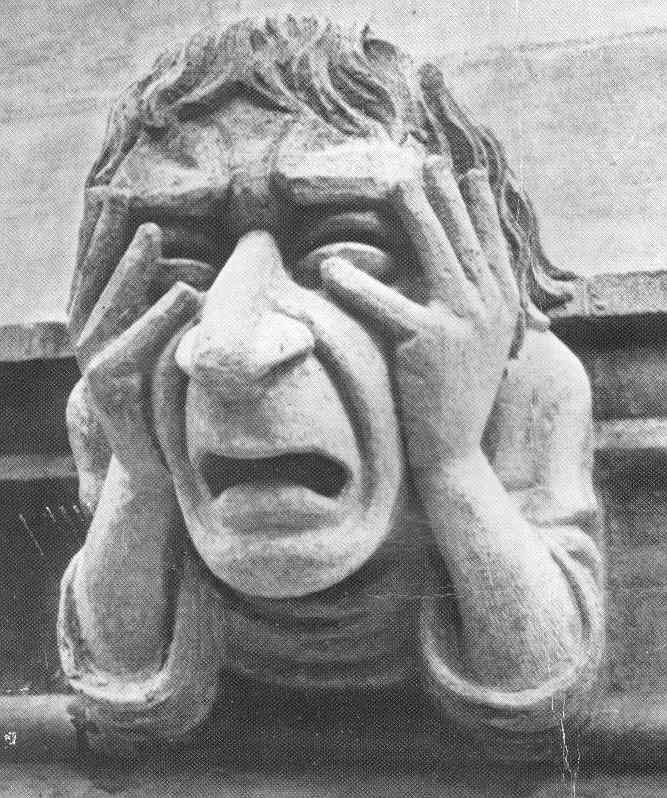






 well last week our "assignment" included creating a special secret place in our minds and creating a figure that is an expert with a problem we having in our lives. once the figure is there you are supposed to ask it questions and seek advise with your problem (usually an ailment, like cancer). you are supposed to follow the direction of the figure and ponder its answers to your questions. if you dont want to do that, then you are supposed to create a figure for your "pain" to take shape in. then do pretty much the same thing to it. ask it stuff like "why are your here tormenting me?"


